Snapchat is to allow users in the UK to buy and create their own personalised in-app Lenses for the first time.
The Snapchat Lens is the popular face and voice-changing tool found in the app’s front-facing camera and is used by more than 70 million people every day, according to the photo sharing app.
The new personalisation feature will enable users to choose from more than 150 face-editing templates and customise them with text and emoji before sharing them on the platform, with prices starting at £5.99, Snapchat confirmed.
It’s ideal for use on special occasions like birthdays (Snapchat/PA)
Users can set time and location restrictions on the Lens filters, with the social app calling them ideal for use at special occasions such as weddings or birthdays.
advertisement
It can be found online at snapchat.com/create or through the Settings section of the app.
The new Lens tool will be available to Snapchat users on Apple’s iOS and on the web (Snapchat/PA)
Snapchat users are already able to create their own Geofilters – location-based frames for photos and videos.
The social app confirmed the new Lens tool will be available to Snapchat users on Apple’s iOS and on the web, with the feature reaching Android users “very soon”.
Snapchat is engaged in an ongoing battle for users with Facebook’s family of apps – most notably Instagram. Facebook’s apps have adopted a series of features similar to those of Snapchat over the last two years, in an attempt to eat away at the app’s popularity among younger social media users.
In response, Snapchat has rolled out a range of updates of its own with mixed results. A major redesign of the app was met with a negative response in some quarters – and even a Change.org petition to revert to the old version.
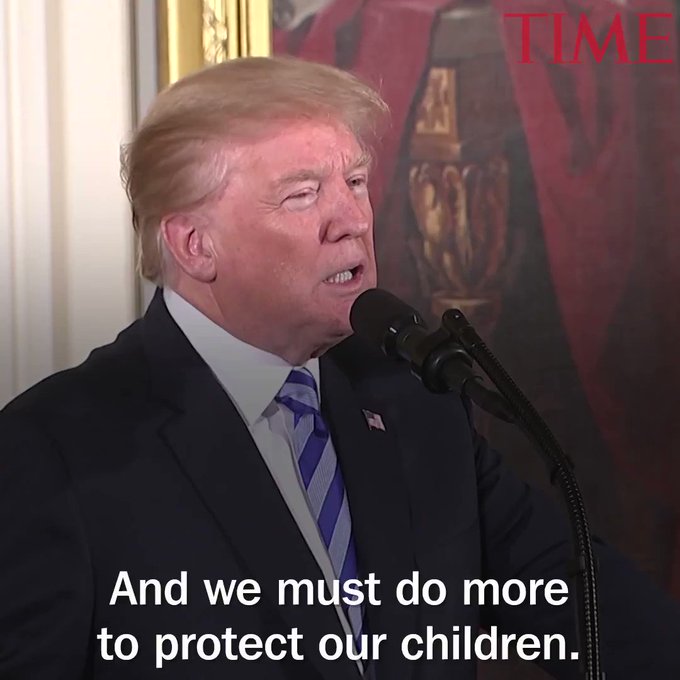
President Donald Trump has signed a memo directing the Justice Department to propose regulations to "ban all devices" like the bump stocks used in last year's Las Vegas massacre.
The president made the announcement to curb the use of the rapid-fire devices during a ceremony recognising bravery by the nation's public safety officers.
Mr Trump was responding days after 17 people were shot dead at a Florida school.
He pointed to the need for regulations to ban the device that was used to shoot 58 people in Las Vegas last October.
advertisement
White House officials said the president will meet students, teachers and state and local officials to discuss ways of providing more school safety and address gun violence.
Past efforts to address gun violence in Congress have failed.
Mr Trump said: "We must move past cliches and tired debates and focus on evidence based solutions and security measures that actually work."
Bump stocks were used in the Las Vegas massacre, and were attached to six of the long guns found in the shooter's hotel room.
A legislative effort to ban the device fizzled out last year.
Mr Trump has also indicated he is open to a limited strengthening of federal background checks on gun purchases.
Over the weekend, the White House said he had spoken to Senator John Cornyn, a Texas Republican, about a bipartisan bill designed to strengthen the FBI database of prohibited gun buyers.
If President Trump were watching right now, what would you want to say to him?
Florida school shooting survivor: "I think that it's really important that you listen to us. ... You are working for us and kids are dead." http://cnn.it/2CA9V6F
The president's spokeswoman Sarah Huckabee Sanders qualified the support, stressing that talks continue and "revisions are being considered".
But she said "the president is supportive of efforts to improve the federal background check system".
The main action Mr Trump has taken on guns has been to sign a resolution blocking an Obama-era rule designed to keep guns out of the hands of certain mentally disabled people.
The president has voiced strong support for gun rights and the National Rifle Association.
The bipartisan background check legislation would be aimed at ensuring that federal agencies and states accurately report relevant criminal information to the FBI.
It was introduced after the US air force failed to report the criminal history of a gunman who slaughtered more than two dozen people at a Texas church.
The president's statement comes as shooting survivors and other young people press for more gun control in a rising chorus of grief and activism.
Their "March for Our Lives" is planned for March 24 in Washington.
Ella Fesler, a 16-year-old from Alexandria, Virginia, was among the students at a "lie-in" earlier today in front of the White House.
She said it was time for change, adding: "Every day when I say 'bye' to my parents, I do acknowledge the fact that I could never see my parents again."
The jury in the trial of David Drumm has heard that Anglo Irish Bank's audit committee was an independent watchdog tasked with overseeing management's activities.
Natasha Mercer, former company secretary at Anglo Irish Bank, agreed with Brendan Grehan SC, defending, that the committee's job was to challenge management if things were not being done in an appropriate manner.
“All members of this committee had substantial accountancy experience and were tasked with acting as a barometer,” she said.
Mr Drumm (51), with an address in Skerries, Co Dublin (pictured below), has pleaded not guilty to conspiring with former bank officials Denis Casey, William McAteer, John Bowe and others to defraud depositors and investors at Anglo by “dishonestly” creating the impression that deposits in 2008 were €7.2bn larger than they were.
The former chief executive of the bank has also pleaded not guilty to false accounting on December 3, 2008, by furnishing information to the market that Anglo's 2008 deposits were €7.2bn larger than they were.
Last week the trial at Dublin Circuit Criminal Court heard that Mr Drumm accepts the facts of the 2008 transactions between Anglo and Irish Life and Permanent, but he disputes that they were fraudulent or dishonest.
On day 27 of the trial Mary Rose Gearty SC, prosecuting, asked Ms Mercer about draft minutes of an audit committee meeting held on November 18, 2008.
The witness said she and Gary McGann, the head of the audit committee, had differing recollections of what was said at that meeting about Anglo's loan of €7.2 billion to ILP in September 2008.
She agreed with Ms Gearty that Mr McGann said he wanted his description of the ILP transactions, which was “customer deposits”, to be included in the final version of the minutes.
On Monday the jury heard that Ms Mercer had not mentioned customer deposits in the draft minutes that she circulated.
“It was a two-hour meeting; the customer deposits were a two minute discussion. It didn't seem like a big area to me at the time,” she said.
Earlier in the trial a juror was released from duty after a note was handed to Judge Karen O'Connor by the forewoman.
“I have released one of jurors for reason that she is acquainted with someone who was referred to during the proceedings,” the judge said.
As three extra jurors had been empanelled at the outset of the trial in January, the case now continues before a jury of 10 men and four women.
The British Government spent almost £1,000 hand-delivering the Article 50 letter declaring the UK's intention to leave the EU to Brussels, it has been revealed.
Two British civil servants travelled to the Belgian capital with the letter by Channel Tunnel train on return business-class tickets costing £491.50 (€558) each, said the UK's Foreign Office.
The terms of Article 50 of the EU treaties state only that a country wishing to leave the EU is required to "notify the European Council of its intention", and it is understood that this could have been done by email.
However, it was decided that the historic letter would be handed over to European Council president Donald Tusk by UK permanent representative Sir Tim Barrow in person on March 29, 2017.
Theresa May signing the Article 50 letter last year.
advertisement
In response to a Freedom of Information request, the UK Representation to the EU said that the cost of two Eurostar Business Premier tickets, including a £1.50 (€1.70) booking fee and £2.50 (€2.83) change fee, came to £985.50 (€1,118).
"There were no other quantifiable costs associated with their travel," said the response. "Meals were provided on the Eurostar and the two civil servants stayed overnight at the Residence.
"The letter was then delivered to the President of the European Council by Sir Tim Barrow as part of his duties as UK Permanent Representative to the European Union at no additional cost."
Business Premier is the most expensive passenger ticket offered on regular Eurostar services, with standard tickets typically retailing for around £89-£159 (€101-180) each way.
The company's website states that the ticket includes "hot meals designed by Raymond Blanc, served with champagne", along with spacious seats, use of an "exclusive" lounge, a taxi-booking service and the option of changes and cancellation free of charge.
Holders of Business Premier tickets can turn up at the gate up to 10 minutes before departure, rather than 45 minutes with standard tickets.
From “OK Google”, to “Alexa”, or “Hey Siri”… there’s a revolution under way in how we use our computers, and even what we consider to be a computer. For technology giant Google, it’s about building the most natural conversation possible. How does the man charged with directing that conversation think the world of human-computer interaction is changing?
In the morning, just before I leave the house I ask: “OK Google, how’s my journey to work looking?”
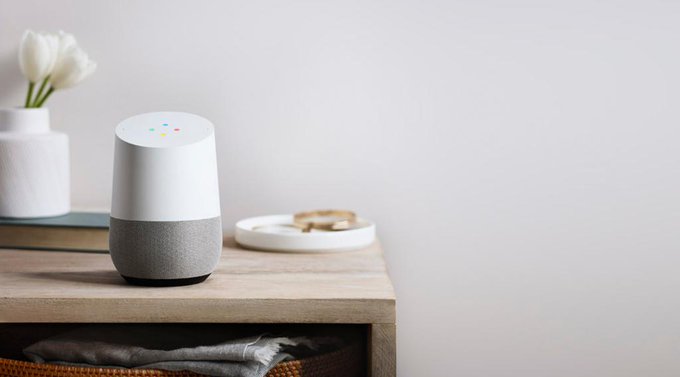
Sat in a corner of my living room, my Google Home smart speaker chirps up and gives me an update on road conditions, throwing the directions and latest traffic details to my Google Pixel phone.
It’s a simple, frictionless interaction which masks a staggering amount of complexity.
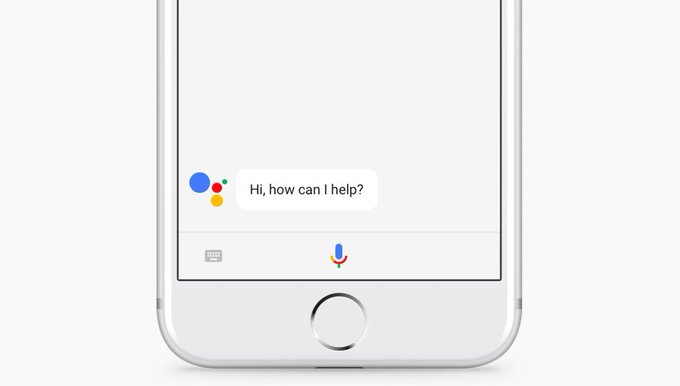
“We started with wanting to build an interface that allowed you to have a conversation with Google,” explains Gummi Hafsteinsson, the man charged with leading Google Assistant.
Mr Hafsteinsson is one of the pioneers of the technology. He worked at Siri, the company bought by Apple to bring intelligence to its devices, later joining the Cupertino firm.
He’s now product management director for Google Assistant – his second stint at the firm. Launched 18 months ago, he says the technology has reached a tipping point.
“Once we started to look into what did it mean to have a conversation with technology, it opened up a lot of opportunities,” he said.
“(With Assistant), you can have a conversation with technology and you shouldn’t have to learn how to use it.”
He describes Google Assistant as the interface that adapts to us as people, rather than requiring us to adapt to the technology.
Thirty years ago, if you wanted to use a computer it’s likely you sat at a fixed position in either your home or an office and typed on a keyboard, and used a mouse to control a graphical user interface.
A decade later and you could shift the same experience to a laptop – the interface was the same, it’s just the location could change. Ten years ago the birth of the first modern smartphone fundamentally altered our relationship with computers, and while it helped remove barriers, our relationship still felt like one between user and tool.
Today we are on the brink of a shift from computing power being something held in a device connected to the net that we touch, to something far more ambient, and with a resultant shift in how we interface with that technology.
Is the technology becoming invisible?
Mr Hafsteinsson says: “To a point, yes. Invisible, ephemeral – it should be seamless. It should be there for you. But it shouldn’t feel like you are having to think about how to do something. It should be natural.”
(Dominic Lipinski/PA)
What’s remarkable about the technology is there are times when it does feel almost organic – where the artificial nature of using a computer is almost removed.
Mr Hafsteinsson says this is a golden age of innovation for such technology.
“We don’t want the consumer to think about the complexity,” he says.
“There’s been a lot of progress. We’ve got really good at speech recognition, industry wide. At Google we have a really good technology stack. We are making really good progress. But we are not done.”
From playing music, starting video to setting timers and controlling your lights or your heating, Google Assistant is well named – it’s a helpful companion that removes some of the manual steps of many perfunctory tasks.
It’s easy to mistake it for a different kind of remote control, but where the technology is becoming genuinely transformative is in its ability to answer questions to a surprisingly diverse range of queries.
(Yui Mok/PA)
“The other day I spilled some red wine and I asked Assistant what to do and it was very helpful,” said Mr Hafsteinsson.
“We didn’t program it (to respond to that question) – it found information on the web. It was a paragraph that made sense when read out.”
Despite being the architect of Google Assistant, Mr Hafsteinsson laughs when asked if it still surprises him.
“I asked Assistant how I could become a ninja, and it had an answer,” he chuckles.
He says the next step is a fully natural conversation with the technology.
In the coming year Assistant will start to inhabit a greater array of devices – from televisions to car systems to wearables and more Android phones.
Google’s approach is to take Assistant into many more contexts than Amazon’s Alexa, which seems confined to the living room, while Apple’s HomePod is being marketed as a speaker first and an smart speaker second.
(Getty Images/Customdesigner)
Mr Hafsteinsson says there will be a multiplying effect as Assistant starts to exist in more devices and more social contexts.
He says: “Because it is so natural, it scales across so many different devices – today on speakers and phones and its coming to display (dedicated consumer electronic devices with screens). It’s available on TV, in your car, on your watch; it’s the same concept to have a conversation but it scales very naturally.
“We are getting to the point where I shouldn’t have to think about the device – it’s there when I need it and doesn’t get in the way.
“Once you have all these points working together, it is a tremendous amount of delight through sheer ease of use.”
For Mr Hafsteinsson, the technology’s rapid development fulfils a goal that sparked his interest in such human computer interactions many years ago.
“When I was studying engineering way, way back, I was fascinated by the idea of the technology becoming more like us than the other way around.
“I was a huge techie and always trying to get my family to use technology. And my dad would say, ‘I will use it when I can talk to it’.”